UK defence tech startups raised $2.9bn of venture capital in 2025, more than any other European country, and $9.9bn since 2020, according to Dealroom and the NATO Innovation Fund (February 2026). The leaders in 2026 are Cambridge Aerospace (a $300m Series C at a $3.4bn valuation in August), the London-based UFORCE, satellite maker Open Cosmos and uncrewed boat builder Kraken Technology Group, each valued at $1bn or more. Most of the rest are in London, with clusters in Cambridge, Oxfordshire, Bristol and the south coast.
This list covers the UK companies in our UK startup directory, with city, sector, founding year, total funding and latest round as of 22 October 2026. It then explains the policy behind the boom: the 2025 Strategic Defence Review, UK Defence Innovation and the pledge to spend at least 10% of equipment procurement on novel technology.
UK defence tech startups at a glance
| Company | City | Sector | Founded | Total funding (approx.) | Latest round |
|---|---|---|---|---|---|
| Cambridge Aerospace | Cambridge | Drone and missile interceptors | 2024 | At least $636m | Series C, $300m at $3.4bn, Aug 2026 |
| Open Cosmos | Harwell | Satellites and space data | 2015 | At least €300m | Series C, €300m at over $1bn, Sep 2026 |
| Kraken Technology Group | Fareham | Uncrewed surface vessels | 2020 | Over $175m | Series B, $175m at $1bn, Jul 2026 |
| UFORCE | London | Sea, air and land drones | 2025 (UK launch) | About $50m (disclosed) | Seed, $50m at over $1bn, Mar 2026 |
| SatVu | London | Thermal imaging satellites | 2016 | £60m | £30m, Feb 2026 |
| Greenjets | London | Propulsion for drones and interceptors | 2022 | n/d | Series A, $40m, Jul 2026 |
| Space Forge | Cardiff | In-space manufacturing | 2018 | About £31m | Series A, £22.6m, May 2025 |
| Agon | London | Synthetic training for military AI | 2026 | $30m | Seed, $23m, Jul 2026 |
| Adarga | London | AI intelligence analysis | 2016 | $29m to $63m (sources differ) | Series B, $20m, May 2023 |
| Rowden | Bristol | Sensing and data systems | n/d | About £25m | £25m from National Wealth Fund, May 2026 |
| iCOMAT | Gloucester | Composite structures | 2019 | n/d | Series A, $22.5m, Jun 2024 |
| Skyral | London | Simulation and planning | 2023 | About $20m | Series A, $20m, Jun 2025 |
| RevEng.AI | London | Software supply chain security | 2023 | n/d | Series A, $15m, May 2026 |
| Arondite | London | Command and control software | 2023 | About $12m | Seed, $10m, May 2025 |
| Spaceflux | London | Space domain awareness | 2022 | About £9m | Seed extension, £3.5m, Apr 2026 |
| Uplift360 | Bristol | Advanced materials recycling | 2021 | n/d | Seed, €7.4m, Feb 2026 |
| Occam Industries | London | Targeting software for FPV drones | 2024 | About €7m | Seed, €3.8m, Sep 2026 |
| Aquark Technologies | Southampton | Quantum sensing | 2021 | n/d | Seed, €5m, Sep 2024 |
| Online Oceans | Christchurch | Uncrewed surface vessels | 2025 | About £4m | Seed, £4m, Apr 2026 |
| Mutable Tactics | Cambridge | Drone autonomy software | 2024 | $2.1m | Pre-seed, $2.1m, Mar 2026 |
| Shield Space | Lincoln | Space protection | 2025 | About £2m | £2m, Jan 2026 |
| JET Connectivity | Farnborough | Communications | 2020 | n/d | Pre-Series A, £1.2m, Apr 2026 |
Totals are approximate sums of announced rounds from our directory and Dealroom; "n/d" means not disclosed. The directory also lists Augur, Goldilock, HonuWorx, Oxford Dynamics, Slipstream Design, Trypillian, Vizgard and Zelim.
The leaders: interceptors, boats and satellites
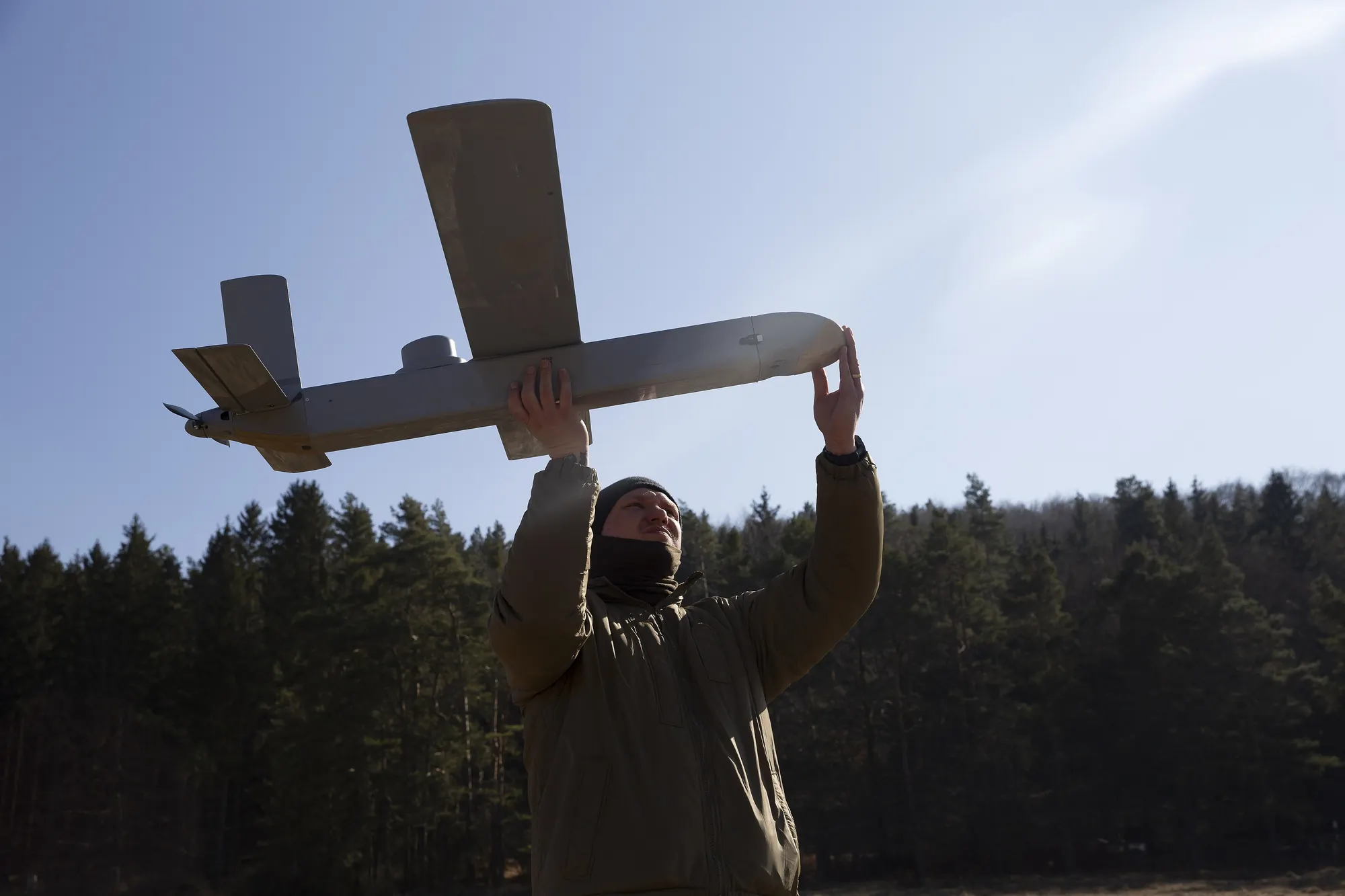
Cambridge Aerospace makes Skyhammer, a low-cost radar-guided interceptor with a range above 30 km aimed at Shahed-type drones, and is developing a faster interceptor, Starhammer, for 2027. DFJ Growth led its $300m Series C on 10 August 2026, four months after a $200m Series B at $1.3bn, taking disclosed funding to at least $636m, Resilience Media reported. It is already under contract with the Ministry of Defence.
Kraken Technology Group, based in Fareham, builds the K3 Scout and larger uncrewed surface vessels. DTCP led its $175m Series B at a $1bn valuation in July 2026, with the British Business Bank, NATO Innovation Fund and Rheinmetall among the investors, and the Royal Navy has bought 20 K3 Scouts under Project Beehive, the UK Defence Journal reported. The headline of that report says £1bn; the body says $1bn.
UFORCE builds the Magura sea drones and Nemesis strike drones used in Ukraine's war. It raised $50m at a valuation above $1bn in March 2026, led by Lakestar, Shield Capital and Ballistic Ventures, Resilience Media reported. On 7 September 2026 Bloomberg reported talks to raise about $500m at around $5bn led by Valor Equity Partners, per The Next Web; the round had not been confirmed as closed by 22 October 2026.
Open Cosmos, with operations in the UK, Spain, Portugal and Greece, raised €300m in a Series C co-led by Lightrock and ETF Partners on 14 September 2026, which made it a unicorn, Satnews reported. The UK's National Security Strategic Investment Fund (NSSIF) took part, per Tech.eu. For how these four compare with the rest of Europe, see our ranking of Europe's defence tech unicorns.
London: software, AI and space data
London's defence startups lean towards software. Agon launched on 29 July 2026 with $30m (a $7m pre-seed led by Lakestar and a $23m seed led by XYZ, Lux Capital and Northzone) to build synthetic battlefields for training military AI, Tech.eu reported. Its founders include a former Anduril director and a co-founder of Cambridge Aerospace.
Arondite raised a $10m seed led by Index Ventures in 2025 for software that links defence hardware from different makers into one interface, ADS reported. RevEng.AI, which analyses compiled software for hidden malicious code, raised a $15m Series A led by the NATO Innovation Fund with In-Q-Tel on 27 May 2026, the NIF said. SatVu, which sells day-and-night thermal imagery mainly to government and defence customers, raised £30m in February 2026, bringing its equity funding to £60m, Tech.eu reported.
Beyond London
Cambridge has Cambridge Aerospace and Mutable Tactics. Harwell in Oxfordshire hosts Open Cosmos and Oxford Dynamics. Bristol has Rowden, which took £25m from the National Wealth Fund in May 2026, the fund's first defence investment, UKTN reported. The south coast, from Southampton to Fareham and Christchurch, is the maritime cluster (Kraken, Online Oceans, Aquark). Scotland has HonuWorx in Aberdeen and Zelim in Edinburgh, and Wales has Space Forge in Cardiff.
The policy: Strategic Defence Review 2025
The Strategic Defence Review (SDR), published on 2 June 2025, made 62 recommendations, all of which the government accepted, Defence Secretary John Healey told Parliament. It committed to spending 2.5% of GDP on defence in 2027 and an ambition of 3% in the next parliament, and to doubling investment in autonomous systems.
For startups, the key changes are about buying faster. The SDR splits procurement into three routes: major platforms (contracting within two years), spiral upgrades (within a year) and "rapid commercial exploitation" (within three months). It also states that drones now kill more people than traditional artillery in Ukraine.
UK Defence Innovation and the 10% pledge
UK Defence Innovation (UKDI), formally launched on 1 July 2025, brings all Ministry of Defence innovation work under one organisation with freedom from standard procurement rules. The Defence Industrial Strategy, published on 8 September 2025, gives it a ringfenced annual budget of at least £400m and commits the MoD to spend at least 10% of its equipment procurement budget on novel technologies such as uncrewed systems and AI from 2026, according to the strategy document. It also targets £2.5bn more MoD spending with small and medium-sized firms by May 2028.
The first tools are small but concrete. In January 2026 the government set up a £20m fund, led by UKDI, that offers accelerated contracts to UK-owned startups with little or no MoD business, ADS reported. On 13 July 2026 the MoD awarded £3.16m to Cambridge Aerospace, Greenjets and Frankenburg Technologies to develop low-cost air defence interceptors under the LCADE programme, part of the five-nation LEAP initiative with Poland, France, Italy and Germany, the MoD said. Greenjets, which raised a $40m Series A led by Blossom Capital with the NATO Innovation Fund and NSSIF in July 2026, supplies engines and airframes for interceptors, per the NIF.
Who invests in UK defence tech
Three kinds of investor show up in the table. State-backed funds are unusually active: NSSIF, the British Business Bank, the National Wealth Fund and the UK Innovation and Science Seed Fund. The NATO Innovation Fund has backed several companies in the table, including iCOMAT, Space Forge, SatVu, RevEng.AI, Greenjets and Kraken (see our NIF portfolio tracker). European and US venture firms lead the large rounds: Lakestar, Lux Capital, Index Ventures, Accel, DFJ Growth, Molten Ventures, Seraphim and Blossom Capital.
Strategic investors are also present. Lockheed Martin is a SatVu shareholder, Rheinmetall invested in Kraken and BAE Systems in Oxford Dynamics. All companies in this article are private and have no stock ticker. This article is for information only and is not investment advice.
What to watch
The test for 2027 is whether the 10% novel technology pledge turns into large production orders rather than development contracts worth a few million pounds. Watch the LCADE interceptor trials, whether UFORCE closes its reported round, and how UKDI spends its first full-year budget. For the German comparison, see our list of defence tech startups in Germany.