Counter-drone companies in Europe cover every layer of the defence chain: radar and radio-frequency sensors (Robin Radar, Molfar Defence, Sensofusion), jammers (MyDefence), kinetic interceptors (Cambridge Aerospace, TYTAN Technologies, Alta Ares, Frankenburg Technologies), lasers (MBDA's DragonFire, Ground A) and command software (MARSS). Investor money has moved fastest into interceptors: Cambridge Aerospace raised a $300m Series C at a $3.4bn valuation on 10 August 2026.
This guide explains how counter-UAS (C-UAS) systems work, then lists the European companies building each layer, with the contracts and rounds that matter as of October 2026. For the companies building the drones themselves, see our list of European military drone manufacturers.
How counter-drone defence works: detect, track, defeat
Every C-UAS system performs the same three jobs. It must detect a small, slow, low-flying object that radars built for jets tend to miss. It must track and classify it, separating a drone from a bird and a hostile drone from a friendly one. Then it must defeat it, either by breaking its radio link (soft kill) or by physically destroying it (hard kill).
No single sensor or weapon does all of this well. Radars see drones that emit nothing, including fibre-optic FPV drones, while RF sensors can find the pilot as well as the aircraft. Jammers are cheap per shot but fail against autonomous or wire-guided drones. Missiles and guns work against anything but cost more per engagement. That is why most buyers now purchase layered systems tied together by command-and-control software, and why the European market has split into specialists.
The companies at a glance
| Company | Country | Approach | Notable contract or round |
|---|---|---|---|
| Robin Radar Systems | Netherlands | IRIS 3D drone-detection radar | 100 radars for the Dutch MoD (Dec 2025) |
| Molfar Defence | Poland | Tactical radar for low-flying and fibre-optic drones | €2m round led by Front Ventures (Jun 2026) |
| Sensofusion | Finland | Airfence passive detection and countermeasures | €45m Series B (2026) |
| MyDefence | Denmark | RF sensors and jammers | Boxer 10 km jammer launched (Jun 2026) |
| Cambridge Aerospace | United Kingdom | Skyhammer radar-guided interceptor | $300m Series C at $3.4bn (Aug 2026) |
| TYTAN Technologies | Germany | METIS AI-guided interceptor drones | €30m Series A co-led by NATO Innovation Fund (Feb 2026) |
| Alta Ares | France | X-Lock and Black Bird interceptors | €50m round (Jun 2026) |
| Alpine Eagle | Germany | Sentinel airborne interceptor system | Bundeswehr launch customer (2024) |
| Frankenburg Technologies | Estonia | Mark I low-cost anti-drone missile | Plant with PGZ in Poland, up to 10,000 missiles a year (Mar 2026) |
| Origin Robotics | Latvia | BLAZE interceptor drone | Deliveries to Latvia, Estonia, Belgium (Feb 2026) |
| Nordic Air Defence | Sweden | Kreuger 100 interceptor | $4.4m pre-seed total (Jul 2025) |
| Rheinmetall | Germany | Skyranger 30 gun system | Dutch order, high triple-digit € millions (Dec 2025) |
| MBDA | UK (European group) | DragonFire laser | £316m UK MoD contract (Nov 2025) |
| Ground A | Germany | GA 1000 laser system | Pre-seed of more than €9m (Sep 2026) |
| MARSS | United Kingdom | NiDAR command and control | £370m Kuwait contract (Oct 2026) |
Startup profiles are in our counter-drone directory.
Detection: radar and RF sensing
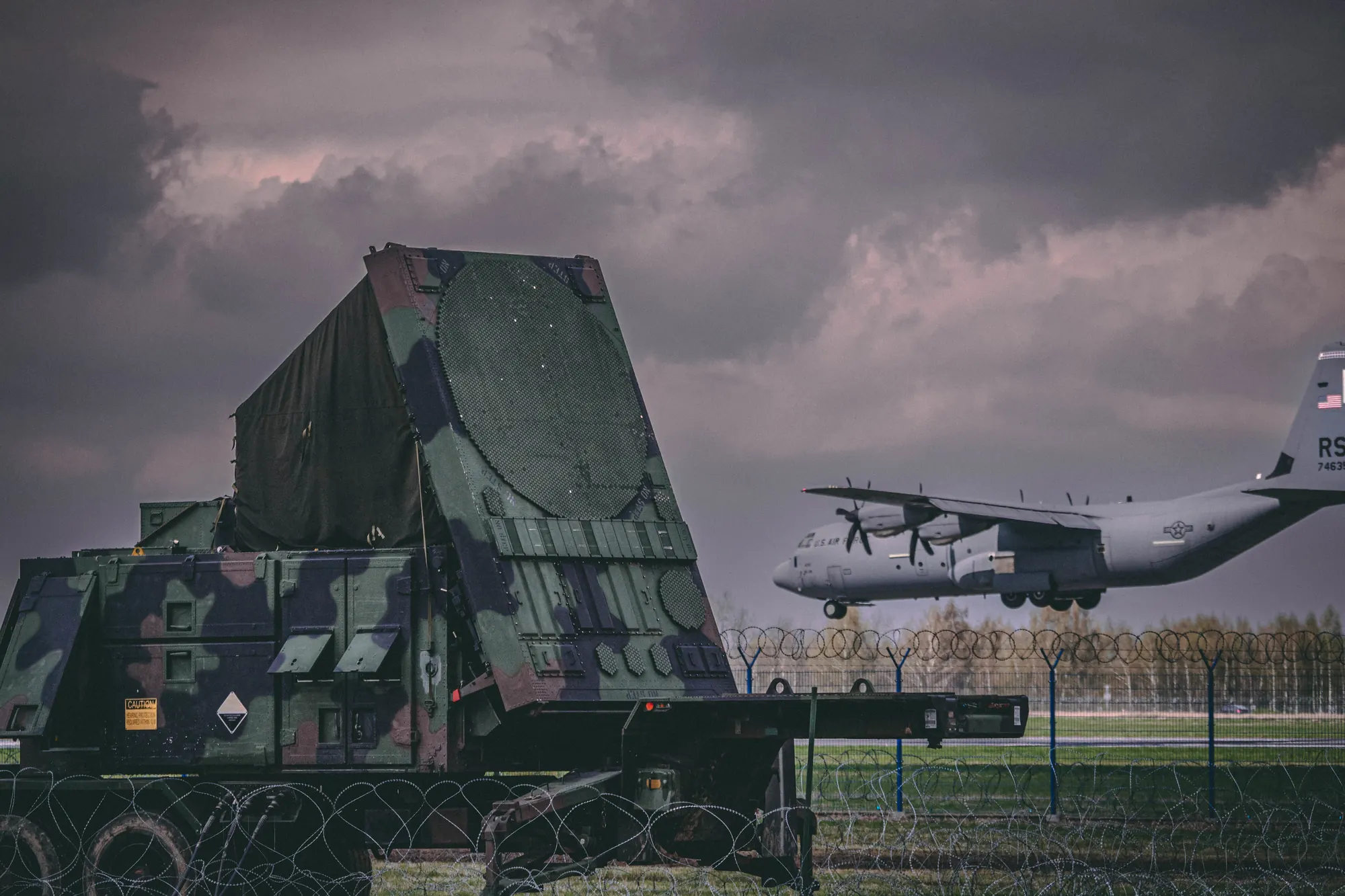
The Hague-based Robin Radar Systems makes IRIS, a 3D radar that separates small drones from birds. On 11 December 2025 it announced a Dutch Ministry of Defence contract for 100 IRIS radars, with the first 50 already delivered, according to the company. It says IRIS covers the 2 to 7 km layer, extendable to 12 km, and that output has risen from 20 radars a year to eight a week.
Molfar Defence, a Polish-Ukrainian startup in Warsaw, is building tactical radars aimed at the hardest target on today's battlefield: fibre-optic FPV drones, which are immune to jamming. It raised €2m led by Sweden's Front Ventures and plans mass production in late 2027, Defense News reported on 8 June 2026.
Finland's Sensofusion sells Airfence, a passive system that gives real-time locations of drones and their pilots, with a military edition carrying countermeasures, per the company. It closed a €45m Series B with Lifeline Ventures, law firm Roschier reported, and in April 2026 bought aircraft maker Atol Aviation to put detection sensors in the air, The Defense Post reported.
Electronic defeat: jammers and soft kill
Jamming remains the cheapest way to stop a radio-controlled drone. Denmark's MyDefence launched Boxer at Eurosatory in June 2026, a high-power multi-band jammer with a quoted range of up to 10 km that plugs into electronic warfare and C2 networks, Unmanned Airspace reported.
The limit of soft kill is autonomy. Drones that navigate by onboard vision, or that are steered through a fibre-optic cable, do not need the radio link a jammer attacks. That gap explains why so much 2026 capital has gone to hard-kill interceptors.
Kinetic interceptors: the busiest layer
Cambridge Aerospace builds Skyhammer, a low-cost radar-guided interceptor with a range above 30 km designed to destroy attack drones. It is under contract with the UK Ministry of Defence and works on the LEAP programme. Its $300m Series C, led by DFJ Growth on 10 August 2026, followed a $200m Series B in April, The Next Web reported.
Munich's TYTAN Technologies makes METIS, an AI-guided interceptor drone for Class I and II threats including Shahed-type drones. Its €30m Series A on 24 February 2026 was co-led by the NATO Innovation Fund and Armira, and Ukraine has procured thousands of METIS interceptors, the NIF said. Partners include Hensoldt, KNDS and Dedrone.
Paris-based Alta Ares raised €50m in June 2026 for two interceptors: X-Lock against Shahed-type drones out to 15 km and Black Bird against cruise missiles and glide bombs out to 30 km, with production in France and Ukraine, The Defense Post reported.
Alpine Eagle takes the fight into the air: its Sentinel system uses a mothership drone that carries smaller interceptors, which net or destroy targets, backed by an airborne radar network. The Bundeswehr was its launch customer in 2024, and it is building a production site near Munich, The Next Web reported in March 2026.
In the north and east, Estonia's Frankenburg Technologies and Poland's state group PGZ agreed in March 2026 to build a plant in Poland with capacity of up to 10,000 missiles a year, starting with the Mark I (range up to 2 km) and a planned Mark II (5 to 8 km), Notes from Poland reported. Latvia's Origin Robotics began delivering BLAZE interceptors to Latvia, Estonia and Belgium in February 2026, per EDR Magazine. Stockholm's Nordic Air Defence is earlier stage, with $4.4m of pre-seed funding for its battery-powered Kreuger 100, Tech.eu reported.
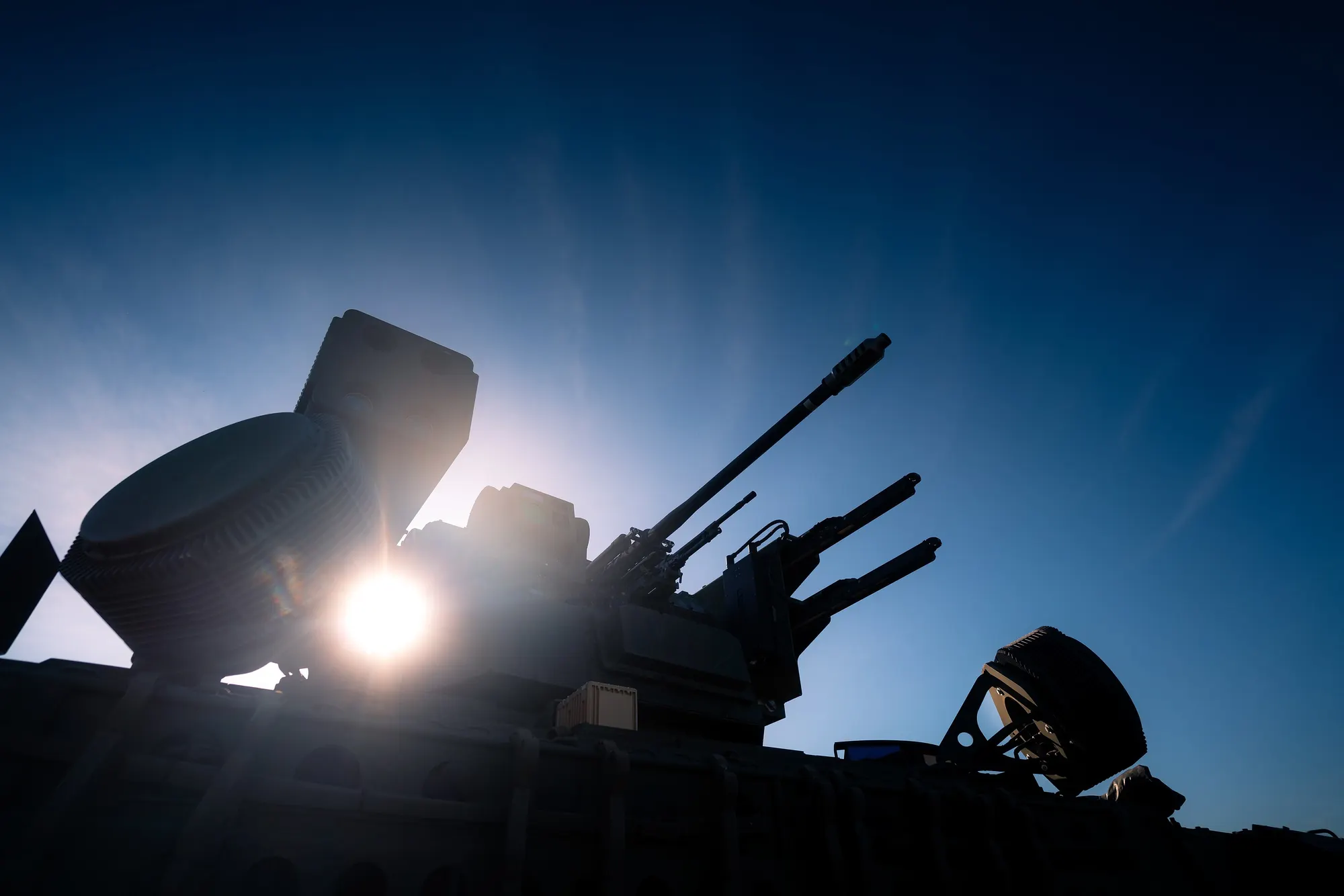
Guns remain part of the mix. Rheinmetall's Skyranger 30 uses a 30 mm cannon with programmable airburst ammunition against drones; the Netherlands ordered a two-digit number of systems in December 2025, for delivery from late 2028, Rheinmetall said.
Lasers and directed energy
Lasers promise near-zero cost per shot once installed. The UK's DragonFire, led by MBDA, is the most advanced European programme: MBDA holds a £316m production contract, and QinetiQ received a £67m subcontract in January 2026 for the laser source, with fitting to Royal Navy ships from 2027, QinetiQ said.
At startup scale, Germany's Ground A came out of stealth on 8 September 2026 with a pre-seed of more than €9m led by Vsquared Ventures, with Quantum Systems among the investors. Its GA 1000 combines radar, computer vision and a laser in a package under 200 kg on a Euro-pallet footprint, with a human operator deciding when to fire, Tech.eu reported.
Command and control software
The layer that ties sensors to effectors is often where contracts are won. MARSS, a UK company now part of Australia's Electro Optic Systems, signed a £370m contract for a nationwide counter-drone network in Kuwait built on its NiDAR command system, which fuses radar, electro-optical and sonar data and cues jammers and interceptors, EDR Magazine reported on 13 October 2026. Several interceptor makers, TYTAN among them, also sell their own integration layers so that their drones can plug into existing radars.
What buyers and investors should watch
Three questions will separate winners. Can interceptor makers produce in the thousands at a cost close to the drones they kill? Can detection keep up with fibre-optic and autonomous drones that emit nothing? And will European procurement, including the EU's SAFE loans, favour integrated layered systems over single products? The companies in this guide are mostly private and have no stock ticker; this article is for information only and is not investment advice.