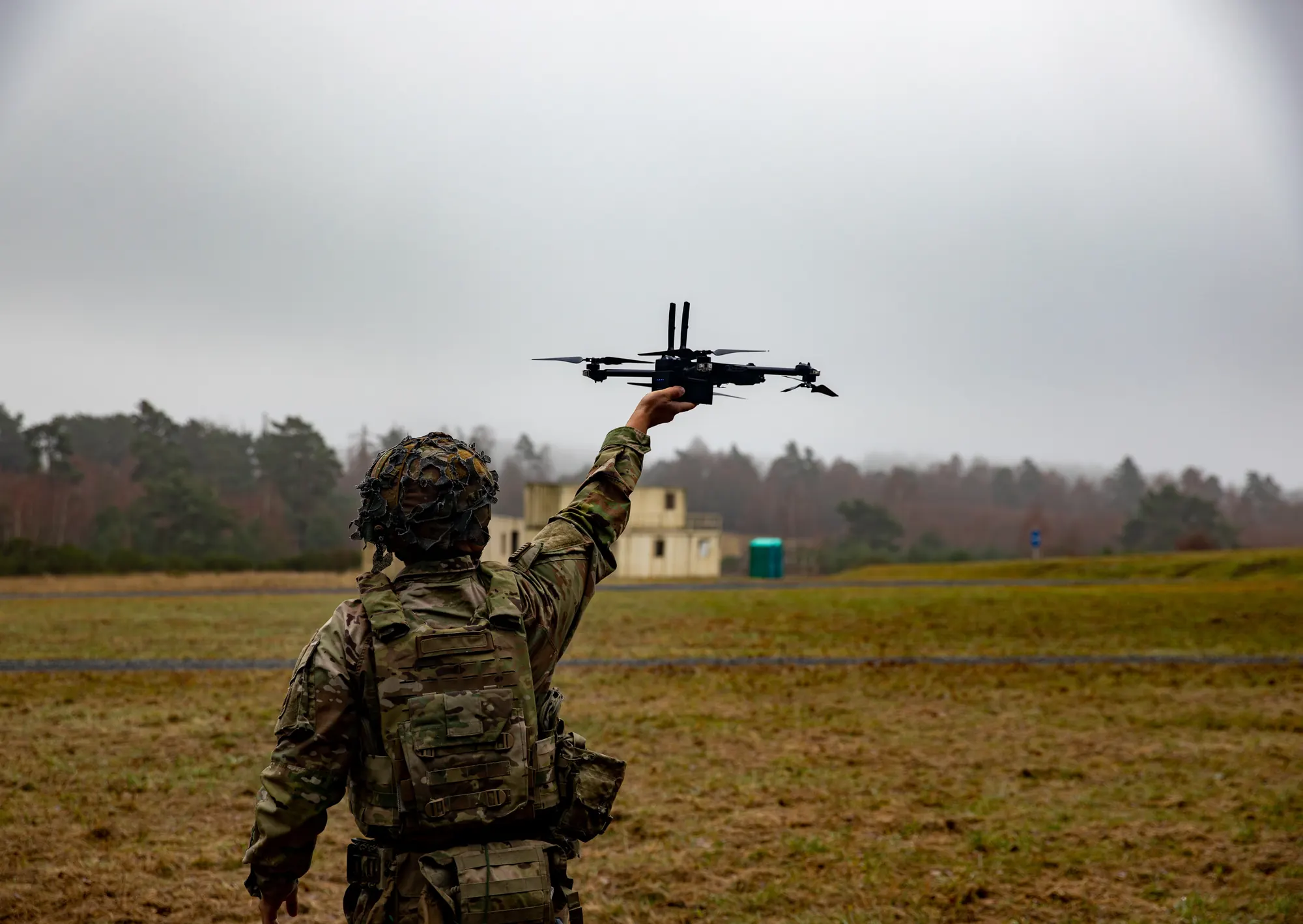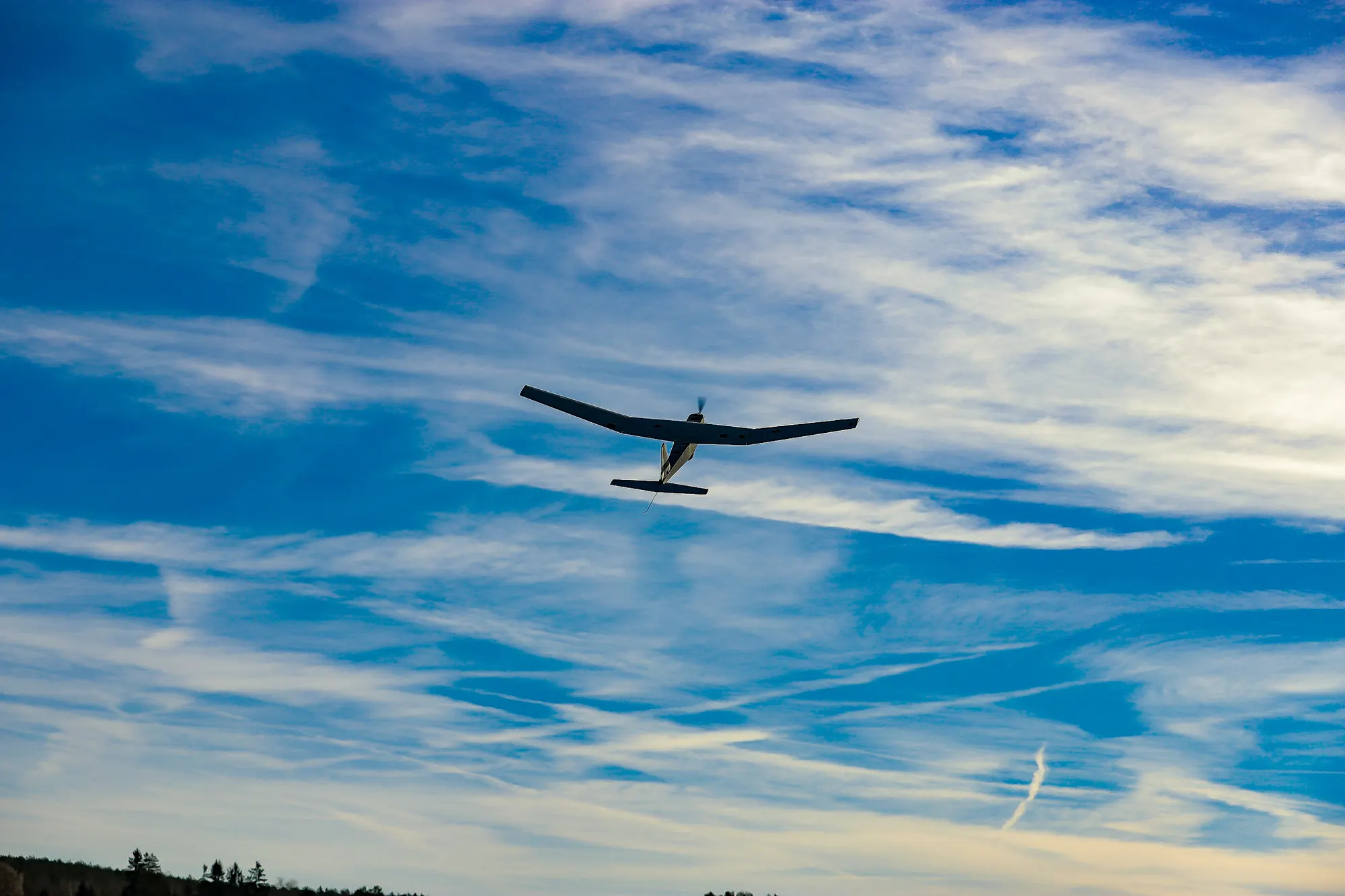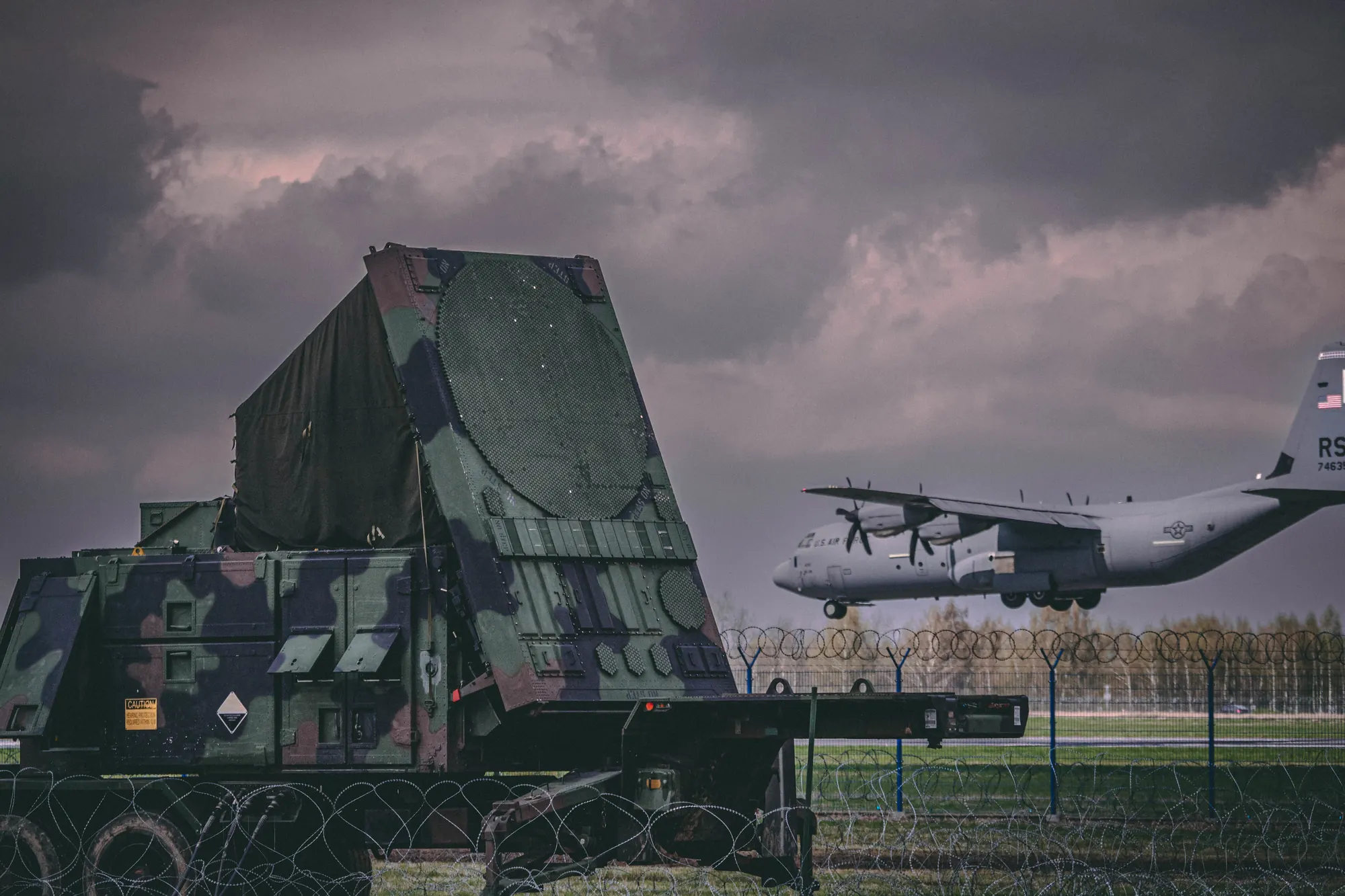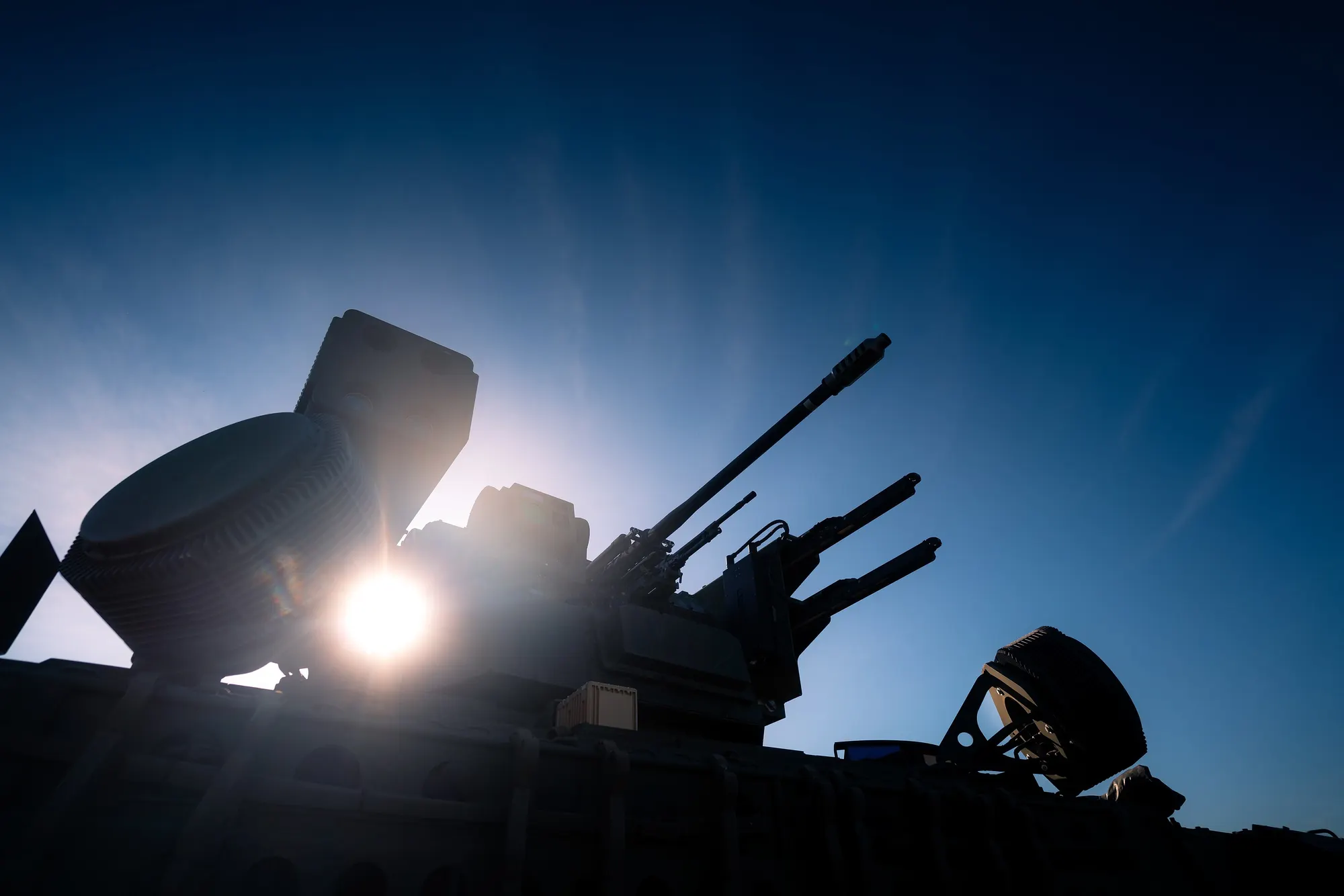
The EU "drone wall" is the informal name for a set of European projects to detect, track and defeat hostile drones along the Union's eastern border and beyond. As of 22 October 2026, it exists mainly as two Council-approved programmes adopted on 28 September 2026: DECODER, a drone and counter-drone project with an indicative investment of EUR 3.5 to 5 billion by 2033, and Eastern Flank Watch, with EUR 8.5 to 10 billion indicated by 2032 and up to EUR 100 billion by 2036, according to European Commission factsheets published in September 2026. Most of the hardware is still bought nationally, and much of it is not yet in place.
This explainer sets out where the idea came from, what Brussels and the Member States have actually decided, which technologies and companies are involved, and what remains unresolved.
Where the drone wall came from: the September 2025 incursions
The concept predates 2025. The Baltic states proposed a drone wall first, and Brussels was initially lukewarm: an EU funding bid was rejected earlier in 2025, Defense News reported in September 2025. The mood changed on the night of 9 to 10 September 2025, when Russian drones entered Polish airspace in the first incursion of its kind into NATO territory.
Counts differ. A Belfer Center paper (September 2026) puts the number at 19 drones, four of them destroyed. The European Security & Defence journal (March 2026) gives an estimated 23, also with four shot down by Dutch F-35As and Polish F-16s. Defense News described "around twenty". Poland invoked Article 4 of the North Atlantic Treaty, and on 12 September 2025 NATO announced Operation Eastern Sentry, a posture-strengthening activity that NATO said would combine traditional capabilities with new technologies, including counter-drone elements.
Further incidents followed. On 22 September 2025, sightings of two or three large drones halted all take-offs and landings at Copenhagen airport for nearly four hours, and Oslo shut its airspace for three hours, Reuters reported. Danish Prime Minister Mette Frederiksen called it "the most serious attack on Danish critical infrastructure to date." The European Parliament Research Service counted at least ten European countries reporting drone sightings over airports and military sites in the following weeks.
What the EU actually decided
In her State of the Union speech on 10 September 2025, Commission President Ursula von der Leyen called for an "Eastern Flank Watch". On 26 September 2025, Defence Commissioner Andrius Kubilius met defence ministers from nine frontline countries and said the Eastern Flank Watch, "with the 'Drone Wall' as its core, will serve all of Europe" (Defense News).
The Commission's Defence Readiness Roadmap 2030, published on 16 October 2025, turned the slogan into four "readiness flagships": the European Drone Defence Initiative (the renamed drone wall), Eastern Flank Watch, European Air Shield and European Space Shield. Member States lead the projects; the Commission coordinates and the High Representative aligns them with NATO plans.
The formal legal step came almost a year later. On 28 September 2026, Member States endorsed and the Council adopted Implementing Decision (EU) 2026/2221, establishing the first five European Defence Projects of Common Interest (EDPCIs), according to the Commission. Two of them are the drone wall in practice:
- DECODER (DronE and Counter Drone European Resolve): aims to give European armed forces "modern, adaptable, scalable and interoperable drone and counter-drone systems operating across all domains". Indicative investment considered by participants: EUR 3.5 to 5 billion by 2033 (factsheet). Defense News reports it is backed by most EU members plus Norway and Ukraine.
- Eastern Flank Watch: a multi-domain effort to secure the EU's eastern border. Indicative investment: EUR 8.5 to 10 billion by 2032 and up to EUR 100 billion by 2036 (factsheet). Defense News reported the range as EUR 60 to 100 billion by 2036 and counted 12 EU Member States plus Norway and Ukraine; the factsheet and the press report do not use the same lower figure.
The other three EDPCIs cover integrated air and missile defence, maritime and seabed defence, and space. Commissioner Kubilius cited an overall "funding ambition" of around EUR 190 billion by 2036 across all five.
What is funded, and by whom
The headline numbers are investment envelopes that participating states "consider", not EU money already committed. The fresh EU cash is far smaller. The Commission says the European Defence Industry Programme (EDIP) totals EUR 1.5 billion, of which EUR 325 million goes to setting up and deploying the EDPCIs (Commission, 28 September 2026). The Belfer paper reports that the EDIP work programme includes about EUR 80 million specifically for counter-UAS.
| Instrument | Size | Role in the drone wall | Source, date |
|---|---|---|---|
| DECODER (EDPCI) | EUR 3.5 to 5bn by 2033 (indicative) | Drone and counter-drone capabilities, all domains | Commission factsheet, Sep 2026 |
| Eastern Flank Watch (EDPCI) | EUR 8.5 to 10bn by 2032; up to EUR 100bn by 2036 | Multi-domain eastern border security | Commission factsheet, Sep 2026 |
| EDIP | EUR 1.5bn total; EUR 325m for EDPCIs | Production scaling and common procurement | Commission, 28 Sep 2026 |
| SAFE loans | About EUR 150bn | Long-maturity loans for national and joint purchases | ESD, Mar 2026 |
| Drone partnership with Ukraine | EUR 6bn | Support for Ukraine's drone production | Defense News, Sep 2025 |
In practice the biggest cheques are national. Poland's SAN counter-drone programme, signed on 30 January 2026 with a Kongsberg and PGZ consortium, covers 18 counter-UAS batteries; Kongsberg's share alone is about NOK 16 billion (Kongsberg). Defense News put the whole system at about PLN 15 billion and said SAFE loans would fund a large share of Poland's new purchases. For more on Poland's spending, see our guide to Poland's defence industry.
Timeline: what was promised and what has happened
| Date | Milestone | Status at 22 Oct 2026 |
|---|---|---|
| 9 to 10 Sep 2025 | Russian drones enter Polish airspace | Happened |
| 12 Sep 2025 | NATO launches Eastern Sentry | Happened |
| 16 Oct 2025 | Defence Readiness Roadmap 2030 published | Happened |
| Dec 2025 | Finland and Poland named joint leads of Eastern Flank Watch (ESD) | Happened |
| Feb 2026 | Commission Action Plan on Drone and Counter Drone Security | Presented; implementation ongoing |
| Q1 2026 | Flagships launched; first EDIP calls and SAFE prefinancing | Legal basis only adopted 28 Sep 2026 |
| End 2026 | Initial capacity for both flagships | Pending |
| End 2027 | Drone defence initiative fully functional | Pending |
| End 2028 | Eastern Flank Watch functional | Pending |
The milestones come from the Commission's roadmap page, which lists targets but does not report whether they have been met. ESD noted in March 2026 that other EU documents also refer to the drone initiative being operational "by 2030", without reconciling the two dates.
Alongside the military track, the Commission presented an Action Plan on Drone and Counter Drone Security in February 2026, built on four pillars (prepare, detect, respond, strengthen) and aimed at protecting critical infrastructure and public spaces. On 21 October 2026, Reuters reported that France passed a law in August 2026 allowing approved infrastructure operators to detect, jam and shoot down drones near designated sites, while Germany is still reviewing how operators could be involved.
The technology: detect, decide, defeat
Despite the name, there is no physical wall. ESD describes the concept as a layered network with four jobs: detect, identify, track and neutralise. Each layer has a different cost and maturity profile.
Detection
Small, slow, low-flying drones are hard for conventional air-defence radars. The toolset includes short-range radars, passive radio-frequency sensors that listen for control links, electro-optical and infrared cameras, and acoustic sensors. The Belfer paper argues detection and data fusion are the weakest and least funded part of the plan.
Electronic defeat
Jamming, spoofing and takeover cut or hijack a drone's control or navigation link. These are cheap per engagement but less effective against drones flying pre-programmed routes or on fibre-optic cable, and they can interfere with civilian systems near airports.
Kinetic and directed energy
Options range from guns (Poland's SAN batteries use 35mm, 30mm and 12.7mm weapons plus a 70mm guided missile, per Kongsberg) to low-cost missiles, interceptor drones and, in development, lasers and high-power microwaves.
The economics drive everything. ESD cites roughly USD 1 million per AIM-120 missile, while Belfer puts the cost of the decoy drones that fighters and Patriots engaged at about USD 35,000. That gap explains why so much new money is flowing to interceptor drones and cheap missiles.
European companies supplying counter-drone systems
Large primes still dominate national contracts. Kongsberg and Poland's state group PGZ lead SAN, with Gdynia-based APS supplying the command-and-control layer. A cohort of younger companies is competing for the interceptor and sensor layers. Profiles in our counter-drone directory (and our wider list of counter-drone companies in Europe) include:
- TYTAN Technologies (Munich): AI-guided METIS interceptor drones; raised a EUR 30 million Series A co-led by the NATO Innovation Fund in February 2026.
- Origin Robotics (Riga): BLAZE interceptor drone. Latvia approved the first contract under a multi-year framework on 21 April 2026, and the company says BLAZE qualifies as European-origin under SAFE rules (Janes).
- Frankenburg Technologies (Tallinn): low-cost guided missiles to intercept drones at scale.
- Cambridge Aerospace (UK): Skyhammer, a radar-guided interceptor for Shahed-type drones and subsonic missiles.
- Alta Ares (Paris): AI-guided low-cost interceptors.
- Nordic Air Defence (Stockholm): the Kreuger 100 family of battery-powered kinetic interceptors.
- Alpine Eagle (Munich): Sentinel, an airborne system that detects and intercepts drones.
- Sensofusion (Helsinki): Airfence, which detects drones from their radio signals and can take control of them.
- Molfar Defence (Warsaw): tactical radar for small low-flying drones, including fibre-optic FPVs; closed the first tranche of a EUR 2 million round in June 2026.
- Ground A (Düsseldorf): the GA 1000 pallet-sized laser counter-drone system.
In the Baltics, Estonia's DefSecIntel, a contractor on the Baltic drone wall that makes detection sensors and jammers, partnered with Origin Robotics in 2025, Defense News reported. Inclusion in this list does not mean a company holds a DECODER or Eastern Flank Watch contract; no such project-level awards had been published as of 22 October 2026.
Criticism and open questions
Money versus envelopes. The indicative totals dwarf the EUR 325 million EDIP allocation. Whether the gap is filled depends on national budgets, SAFE loans and the next Multiannual Financial Framework, which the Commission says may continue support through a proposed European Competitiveness Fund.
Who commands what. ESD notes that public documents do not specify the sensors, effectors, networking or command arrangements, or who is authorised to engage a threat. The roadmap leaves military command to Member States and NATO.
Split capitals. The EPRS briefing described Poland, the Baltic states and Finland as treating the plan as urgent, while France, Germany, Italy and Greece questioned cost, feasibility and encroachment on national defence powers. One expert quoted there argued the drone wall mainly reassures populations rather than answering hybrid warfare.
Buying the wrong thing. The Belfer paper warns that interceptors bought against the 2025 threat may be outdated by 2027, that most vendors sell effectors without integration, and that the EU initiative and NATO's Eastern Sentry compete for the same production capacity. It also reports that Poland's SkyCTRL anti-drone system was delayed 18 months for lack of funds and was not active during the September 2025 incursion; that claim rests on the Belfer paper.
Ukraine's role. Ukraine participates in four of the five EDPCIs. It is the only supplier with combat-proven scale, but Belfer describes its export approvals as slow, at roughly 90 days per application.
What to watch next
The end-2026 "initial capacity" milestone is ten weeks away. The signals to watch are the first EDIP calls tied to DECODER and Eastern Flank Watch, project-level contract awards, and whether national counter-drone buys such as Poland's SAN are formally linked to the EU projects. For a broader map of suppliers, browse the European defence tech directory.