Poland is NATO's biggest defence spender relative to the size of its economy. SIPRI's April 2026 fact sheet puts Polish military spending at 4.5% of GDP in 2025, the highest burden of any NATO member, after a 23% rise on 2024. The 2026 budget allocates about PLN 200 billion, which the government said could exceed 4.8% of GDP. That money is reshaping a defence industry built around the state group PGZ, a few large private firms and a small but growing startup scene.
This guide covers the spending numbers and where they come from, the biggest programmes, the main companies and startups, and the funding routes open to new entrants.
How much Poland spends on defence, and how the figures compare
The figures differ slightly by source and method, so the year and publisher matter.
| Year | Share of GDP | Source and date |
|---|---|---|
| 2024 | 3.8% | NATO data, reported by Notes from Poland, Sep 2025 |
| 2025 | 4.48% (estimate) | NATO estimates, reported by Euronews, Jun 2026 |
| 2025 | 4.5% | SIPRI fact sheet, Apr 2026 |
| 2026 | 4.8% (planned, could be exceeded) | Draft budget (Aug 2025) and Ministry of National Defence via Defense News (Feb 2026) |
According to Euronews, which cites NATO estimates, Poland's 2025 share compares with 4% for Lithuania, 3.73% for Latvia, 3.38% for Estonia and 3.22% for the United States, against a NATO average of 2.76%. NATO allies agreed at The Hague in 2025 to reach 5% of GDP by 2035, of which 3.5% is core defence.
In absolute terms, Poland is not the largest. Notes from Poland reported in September 2025 that NATO put Polish spending at about USD 44.3 billion for 2025, the alliance's sixth-largest budget. The same NATO data showed Poland spending 54.4% of its defence budget on equipment, the highest share in NATO. That equipment share is the figure that matters most for industry.
For 2026, the government's draft budget earmarked a record PLN 200 billion for defence (August 2025). Defense News reported in February 2026 that the 2026 defence budget is about PLN 200.1 billion, up from PLN 186.6 billion, and could exceed 4.8% of GDP.
EU money: Poland is the largest SAFE borrower
Poland has the largest allocation under SAFE, the EU's EUR 150 billion defence loan instrument: EUR 43.7 billion, the biggest of the 19 participating states, Polish Radio reported on 24 April 2026. The Commission sent the draft loan agreement to Warsaw on 23 April 2026, with an advance of about EUR 6.5 billion (15%) payable once it is signed.
The domestic path was not smooth. Polish Radio reported in March 2026 that the president had vetoed the government-backed legislation implementing SAFE. SAFE favours European-made equipment, which is one reason foreign primes are setting up production with Polish partners.
Poland also co-leads, with Finland, the EU's Eastern Flank Watch project (European Security & Defence, March 2026). For how that fits with the EU's counter-drone plans, see our explainer on the EU drone wall and Eastern Flank Watch.
The big programmes driving demand
Air defence is the largest single area. Defense News reported in February 2026 that Warsaw plans to spend about PLN 250 billion on air defence, potentially the largest acquisition programme in Polish history. The layers are:
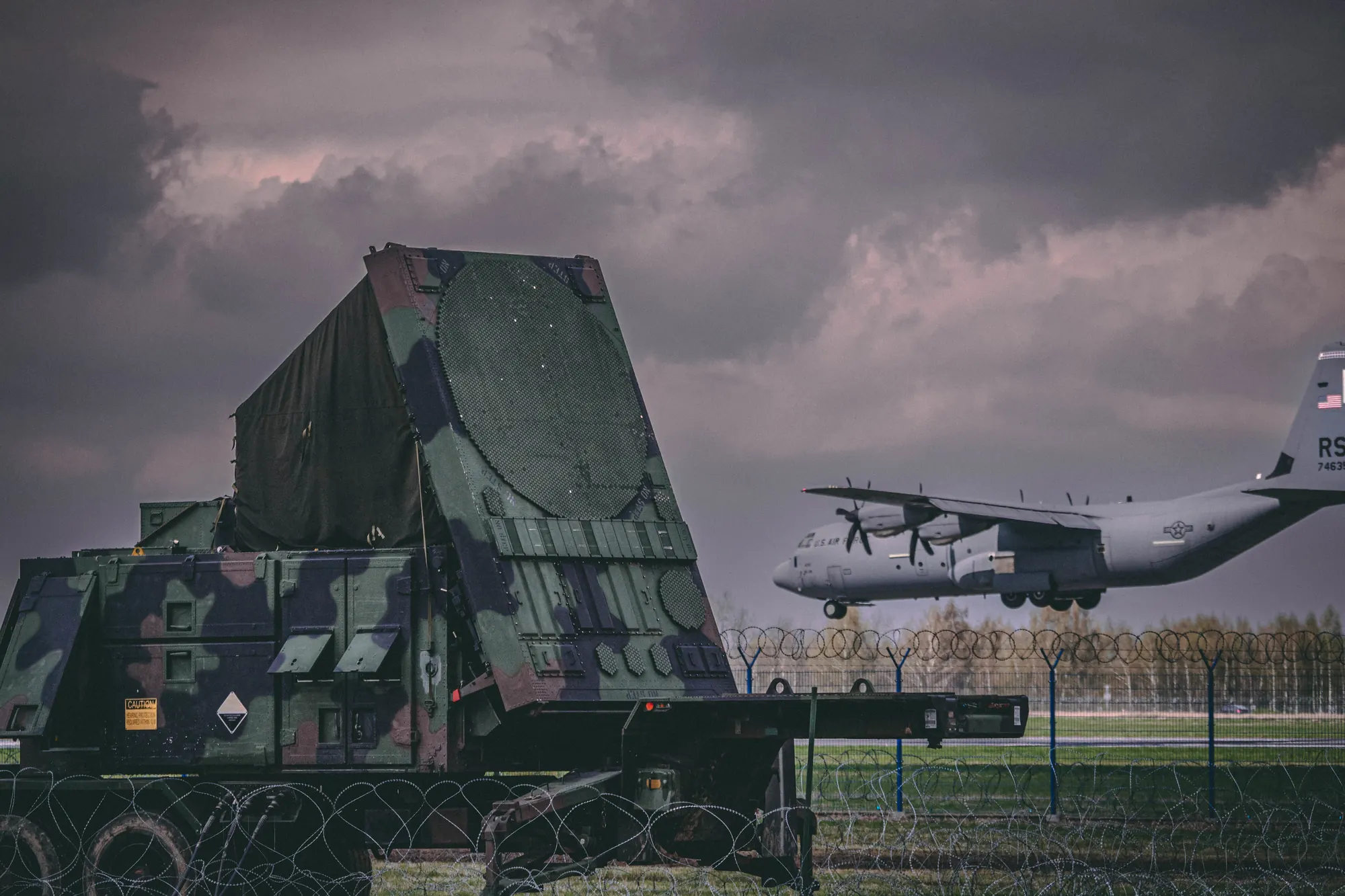
- Wisła: Patriot batteries for medium and long range.
- Narew: short-range air defence using MBDA's CAMM missiles.
- Pilica+: very short-range systems from Polish industry, built by a consortium of PGZ companies (PGZ).
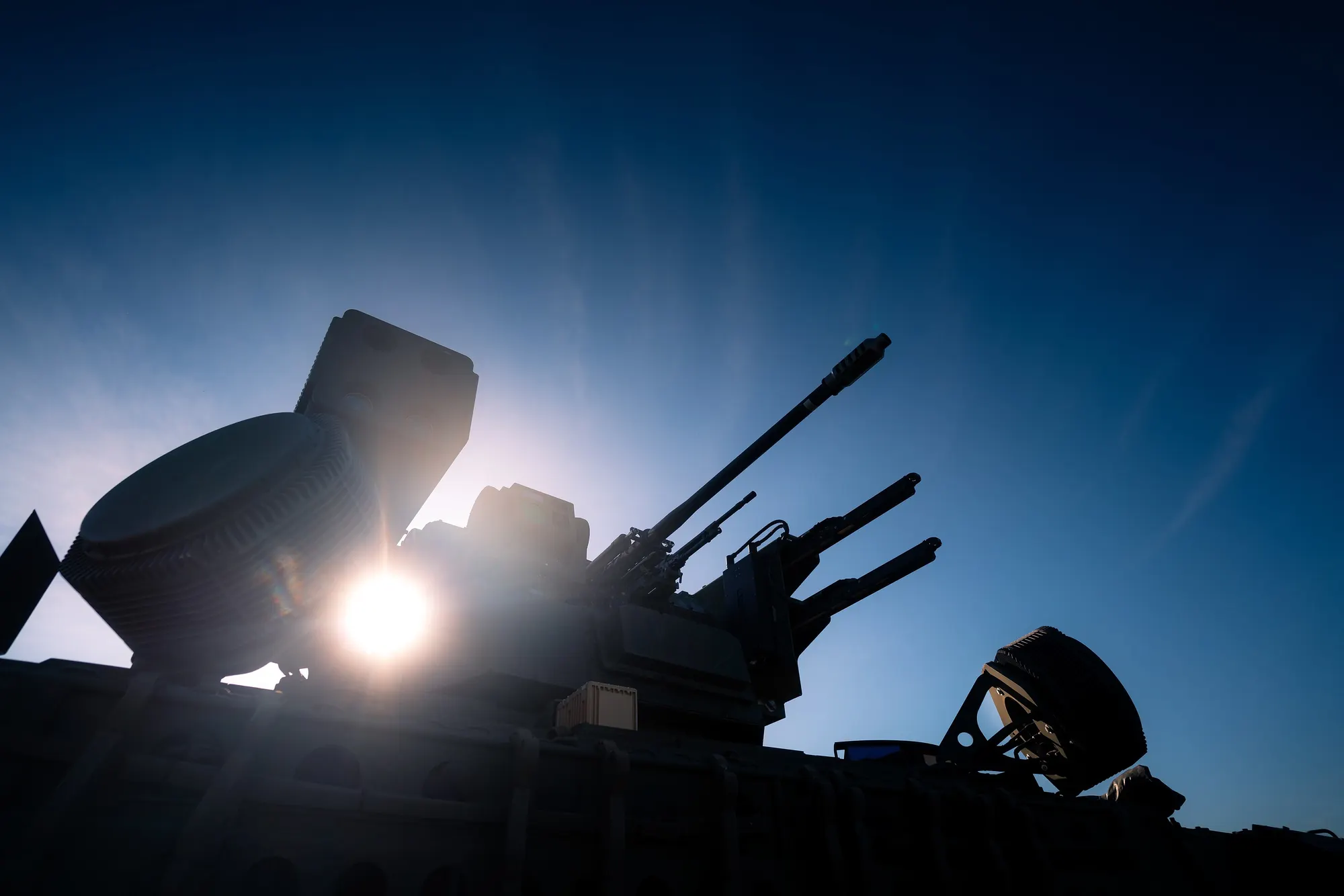
- SAN: a counter-drone system signed on 30 January 2026 with a Kongsberg and PGZ consortium. It covers 18 batteries, 52 firing platoons, 18 command platoons and 703 vehicles, with the whole system worth about PLN 15 billion. First components are due in 2026 and full delivery 24 months after signing. PGZ says about 60% of SAN components will come from its group companies.
SAN followed the night of 9 to 10 September 2025, when Russian drones entered Polish airspace. Defence Minister Władysław Kosiniak-Kamysz called the incursion "a turning point". Kongsberg said its own share is about NOK 16 billion and that it is preparing to invest in expanding manufacturing capacity in Poland.
On land, Huta Stalowa Wola, a PGZ company, develops the Borsuk amphibious infantry fighting vehicle. Other PGZ products listed by the group include the Rosomak wheeled carrier, the Krab howitzer and the Piorun man-portable air-defence missile.
PGZ: the state-owned core
Polska Grupa Zbrojeniowa (PGZ) describes itself as "a strategic component of the defence system of the Republic of Poland". It gathers over 50 companies and holds shares in 32 others across defence, shipbuilding and new technologies.
PGZ is also the main gateway for foreign technology. Recent agreements announced by the group include:
- 6 July 2026: cooperation with Anduril Industries on localised production of the surface-launched Barracuda-500M in Bydgoszcz.
- 15 June 2026: a shareholders' agreement between EURENCO and PGZ's MESKO for a French-Polish joint venture, signed at Eurosatory.
- 16 September 2026: a letter of intent with Viasat on satellite communications and space capabilities.
For startups, this matters because many routes into Polish programmes run through PGZ subsidiaries as prime contractors or integrators.
Private players
WB Group describes itself as Poland's largest private defence-industry company. Its portfolio covers C4ISR, the WARMATE loitering munition, the FLYEYE mini drone, the GLADIUS reconnaissance and strike system and the TOPAZ combat management system. In September 2026 it announced artillery cooperation with KNDS at the MSPO fair in Kielce and a teaming agreement with Optix.
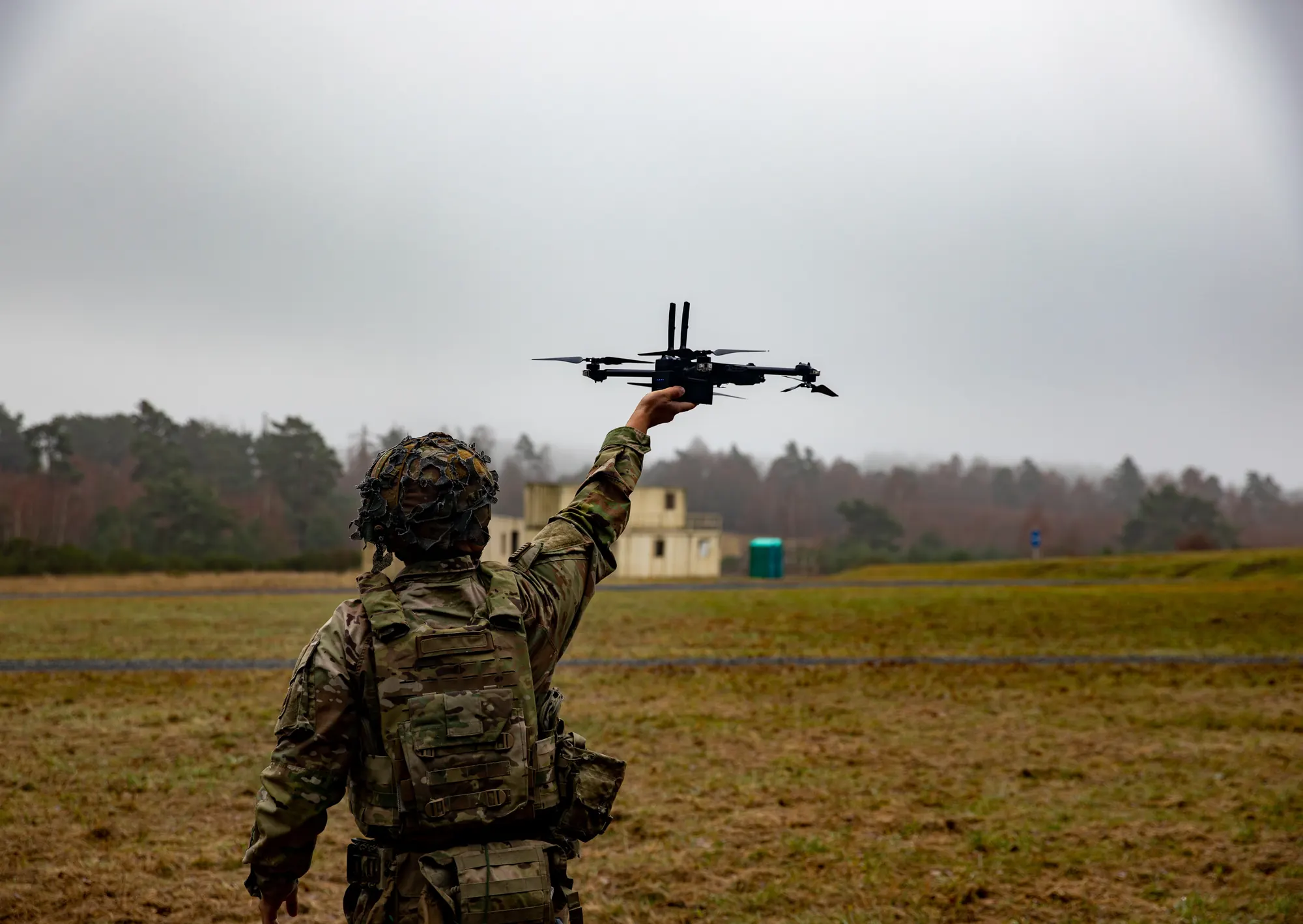
APS (Advanced Protection Systems), based in Gdynia, makes the SKYctrl counter-drone family and FIELDctrl 3D radars. It is a subcontractor on SAN, supplying command-and-control software and sensors. The company says its SKYctrl S system is already used by the Polish and Ukrainian armed forces.
Polish defence startups
Venture-backed defence startups in Poland are still few, and their rounds are small next to procurement budgets. Two are profiled in our directory.
FlyFocus
FlyFocus, founded in 2017, builds fixed-wing drones, a tethered surveillance drone and avionics, and says it sources components only from NATO-aligned suppliers. In February 2026 it raised EUR 4.5 million, its first institutional round after eight years of self-funding, led by ffVC with the NCBR Investment Fund, Tech.eu reported. It plans a dedicated factory in Poland from the second half of 2026 and two new drone platforms during the year.
Molfar Defence
Molfar Defence, a Polish-Ukrainian company founded in 2026, develops a tactical radar to detect and track small, low-flying drones. In June 2026 it closed the first tranche of a EUR 2 million round, with Sweden's Front Ventures committing EUR 1.5 million as lead (Tech.eu). It works with the Ukrainian Armed Forces and a major Polish defence supplier, is opening an office in Ukraine and plans field trials in Ukraine and NATO countries. Its radar fits the detection gap that counter-drone programmes such as SAN are trying to close; see the counter-drone sector for comparable companies.
Notable Polish defence companies
| Company | Type | Focus | Recent signal (date) |
|---|---|---|---|
| PGZ | State-owned group | Land systems, air defence, munitions, shipbuilding | Kongsberg partner on SAN (Jan 2026); Anduril Barracuda-500M deal (Jul 2026) |
| Huta Stalowa Wola (PGZ) | State group company | Armoured vehicles, artillery | Develops Borsuk IFV |
| MESKO (PGZ) | State group company | Munitions | JV agreement with EURENCO (Jun 2026) |
| WB Group | Private | C4ISR, loitering munitions, drones | KNDS artillery cooperation (Sep 2026) |
| APS | Private | Counter-drone, radar, C2 software | SAN subcontractor (2026) |
| FlyFocus | Startup | Fixed-wing and tethered drones | EUR 4.5m round (Feb 2026) |
| Molfar Defence | Startup | Counter-drone radar | EUR 2m round, first tranche (Jun 2026) |
Foreign primes are also building Polish footprints. Kongsberg plans to expand manufacturing in Poland for SAN, and Anduril's Barracuda-500M is set for local production with PGZ in Bydgoszcz.
Funding programmes and routes to market
For founders and investors, the money comes through four main channels:
- National budget and procurement. The roughly PLN 200 billion 2026 budget and the multi-year air defence plan create demand, usually through the Armament Agency and large primes.
- EU instruments. SAFE loans (EUR 43.7 billion for Poland) finance purchases, with a preference for European-made products. The European Defence Industry Programme and the new European Defence Projects of Common Interest, adopted in September 2026, add joint procurement and production support.
- State-backed venture capital. The NCBR Investment Fund, the venture arm of Poland's National Centre for Research and Development, co-invested in FlyFocus.
- Foreign VCs and industrial partners. ffVC and Sweden's Front Ventures led the two startup rounds above, and PGZ partnerships with foreign firms create subcontracting openings.
Risks and open questions
Spending at nearly 5% of GDP depends on politics and public finances. The SAFE implementing law was vetoed, and loan disbursement depends on domestic procedures. NATO's percentage figures are estimates and can be revised.
Concentration is another question. PGZ's role as prime on most large programmes, and the preference for proven suppliers, can leave little room for startups unless they partner with primes or with Ukraine, where several Polish firms test their products.
This article is for information only and is not investment advice. FlyFocus, Molfar Defence, WB Group and APS are private companies and have no stock ticker; PGZ is state-owned.