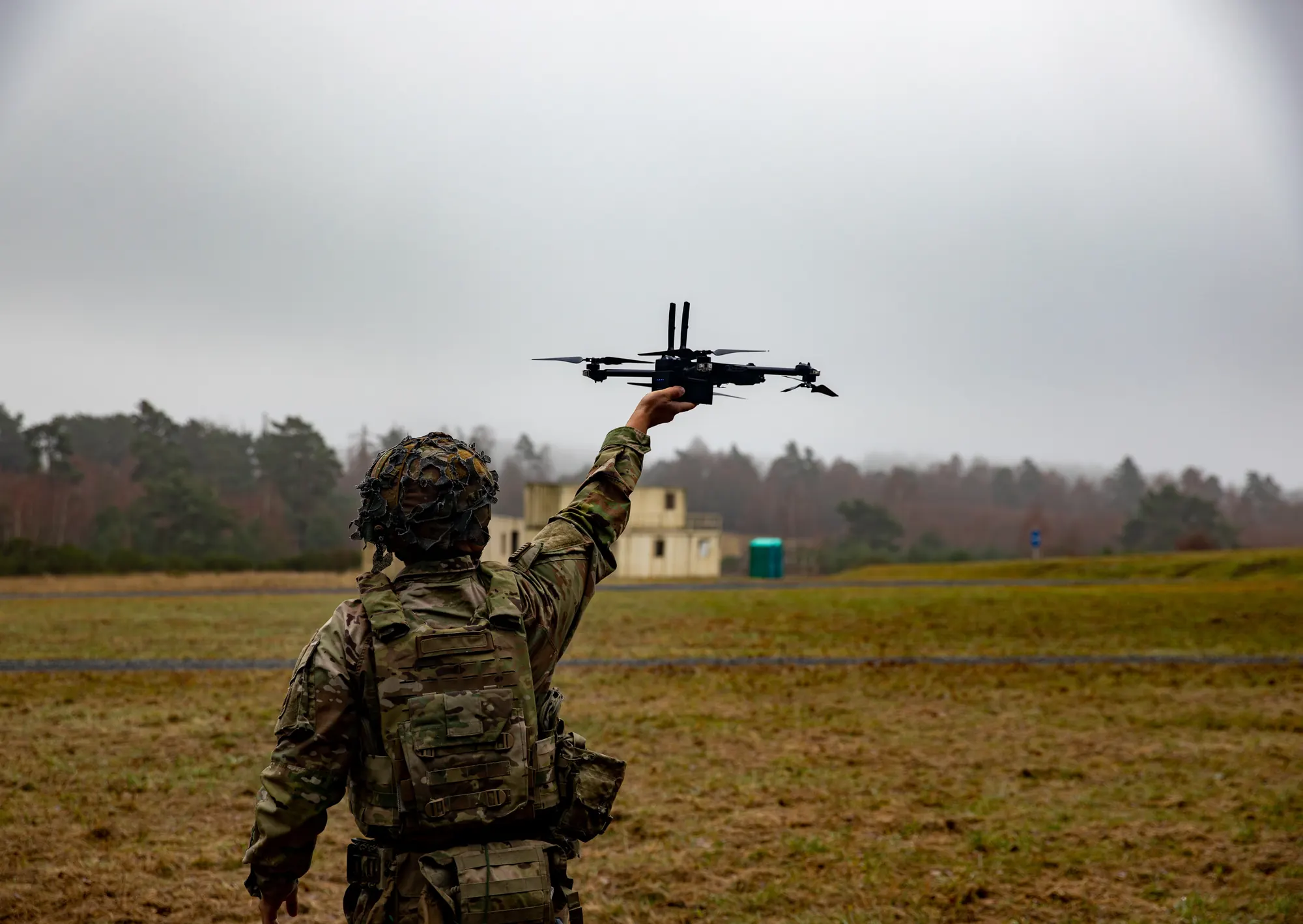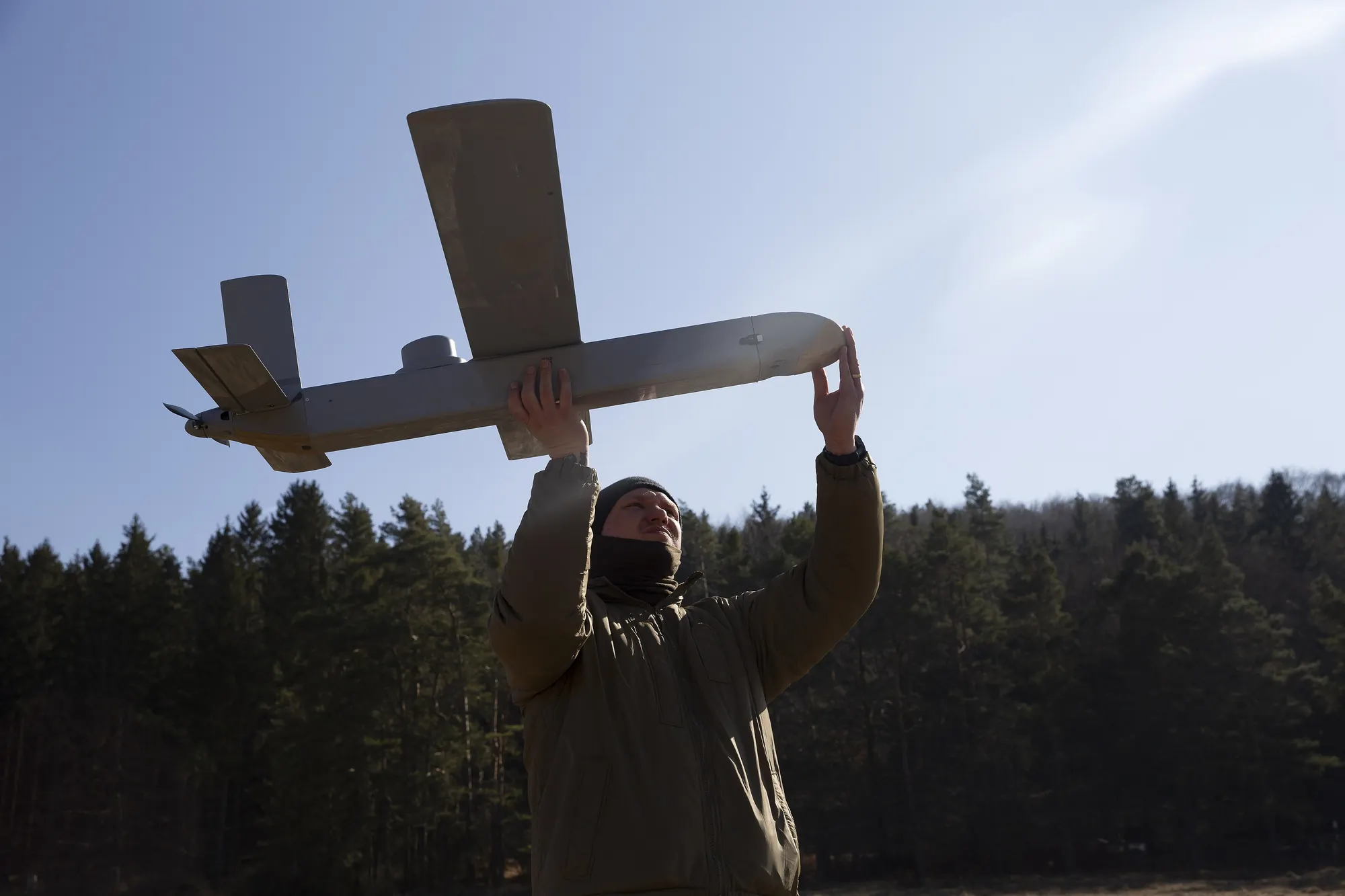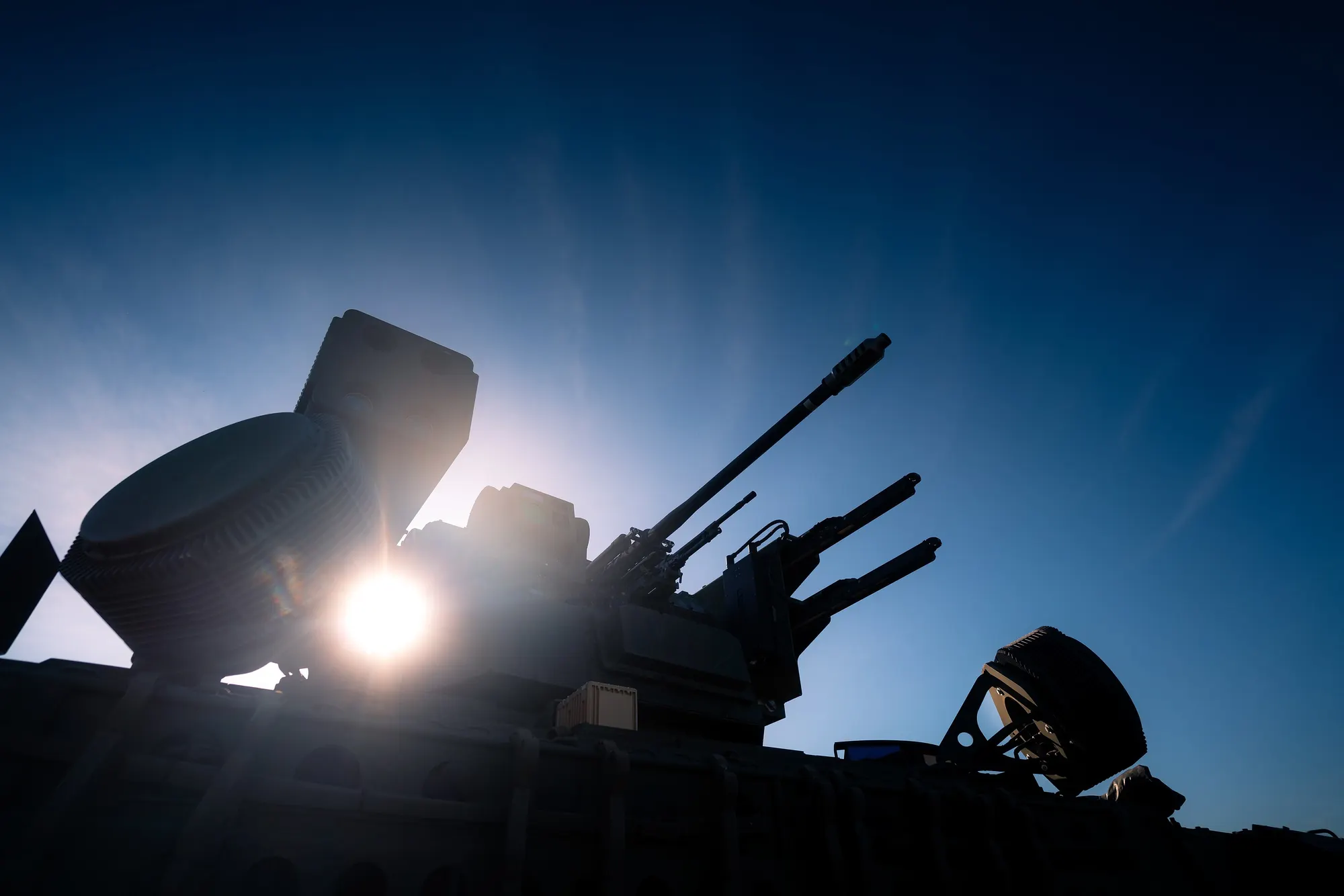
Dual-use technology means goods, software and technology that can be used for both civilian and military applications, in the European Commission's definition. In the EU, the dual-use items that need an export licence are listed in Annex I of Regulation (EU) 2021/821, last replaced by Delegated Regulation (EU) 2025/2003, in force since 15 November 2025. A further update was adopted on 14 September 2026. Typical examples are long-endurance drones, radar, encryption, satellite components, quantum computers and radar-absorbing materials.
This explainer covers the legal meaning, how the EU regulation and its control list work, the licence types, what changed in 2025 and 2026, examples by sector, and what the label now means for raising money.
What "dual-use" means, and what it does not
The term is used in two ways, and founders often mix them up.
The legal sense. An item is dual-use if it appears on the EU control list, or if it is caught by the end-use rules for items not on the list. Exporting it outside the EU then needs an authorisation. Items designed for military use (weapons, munitions, military vehicles) are not covered by this regulation at all: they fall under separate military export rules run by each Member State.
The market sense. Investors and startups use "dual-use" to describe a company that sells the same core technology to civilian and defence customers, such as a mapping drone also used for reconnaissance. A dual-use startup in this sense may have no controlled products, and a purely civilian company can still export controlled items, for example certain semiconductor equipment.
For a founder, both matter: the first decides whether you need a licence to sell abroad, the second shapes which investors and grants you can reach.
The EU Dual-Use Regulation (EU) 2021/821
Regulation (EU) 2021/821, adopted on 20 May 2021, sets up a Union regime for the control of exports, brokering, technical assistance, transit and transfer of dual-use items. It applies directly in every Member State, and national authorities issue the licences.
Annex I is the control list. It implements the lists agreed in the Wassenaar Arrangement, the Missile Technology Control Regime, the Nuclear Suppliers Group, the Australia Group and the Chemical Weapons Convention, according to the Official Journal text of the current list. Each entry has a five-character code: the first digit is the category, as below.
| Category | Covers |
|---|---|
| 0 | Nuclear materials, facilities and equipment |
| 1 | Special materials and related equipment |
| 2 | Materials processing |
| 3 | Electronics |
| 4 | Computers |
| 5 | Telecommunications and "information security" |
| 6 | Sensors and lasers |
| 7 | Navigation and avionics |
| 8 | Marine |
| 9 | Aerospace and propulsion |
Inside the EU, dual-use items move freely, except a short list of particularly sensitive items in Annex IV that still need a licence. Items not on the list can still need a licence if they may be used for weapons of mass destruction or for human rights violations, and Member States may add national controls for public security or human rights reasons, per the Commission's exporter guidance.
The scale is large. Member States authorised €77.6 billion of dual-use exports in 2024, about 3% of extra-EU goods exports, up from €71 billion in 2023, and denied 487 transactions, according to a Commission report of 25 June 2026. China (25%) and the United States (21%) were the top destinations by value.
Licence types
The Commission lists four kinds of export authorisation:
| Licence | Who grants it | What it covers |
|---|---|---|
| Individual licence | National authority, to one exporter | One or more items to one end-user or consignee in a third country |
| Global licence | National authority, to one exporter | Multiple items, destinations or end-users |
| National general export authorisation | A Member State, open to qualifying exporters | Set cases defined nationally, consistent with EU general authorisations |
| Union general export authorisation | The EU (Annex II), open to all qualifying exporters | Low-risk cases, such as exports to Australia, Canada, Japan, the UK and the US, and set categories like encryption, chemicals, telecommunications and intra-group technology transfers |
In practice, a startup selling controlled items to close allies may be able to use a general authorisation, subject to its conditions, while sales elsewhere need an individual or global licence and the waiting time that comes with it.
The 2025 and 2026 updates
The Commission updates Annex I at least once a year by delegated act, according to its 14 September 2026 notice.
2025 update. Delegated Regulation (EU) 2025/2003 was adopted on 8 September 2025, published in the Official Journal on 14 November 2025 and entered into force the next day, as Hanover's chamber of commerce IHK reported and the regulation text confirms. It replaced Annex I in full. Besides the 2024 decisions of the export control regimes, it added items that Member States told the Commission on 23 May 2025 they had all agreed to control, "also as members of the Wassenaar Arrangement". The additions included quantum computers and cryogenic components, semiconductor manufacturing and testing equipment, advanced computing chips, high-temperature coatings and additive manufacturing equipment, plus a broader definition of "spacecraft", according to Baker McKenzie. The new quantum entry (4A506) starts at machines with 34 or more working physical qubits, combined with error-rate thresholds.
2026 update. On 14 September 2026 the Commission adopted another delegated regulation reflecting 2025 decisions of the Wassenaar Arrangement, Australia Group and Nuclear Suppliers Group, plus further Member State commitments. New items include more semiconductor equipment (such as extreme ultraviolet mask inspection), advanced computing chips with digital processing units, mullite-reinforced ceramic matrix composites, inductive rotary encoders, additive manufacturing equipment for energetic materials, and technology for gas turbine axial compressors. It enters into force on publication after the usual two-month scrutiny by the Council and Parliament, so unless that period was cut short, the 2025 list is still the one that applies as of 22 October 2026. Check EUR-Lex for the publication date.
Dual-use technology examples by sector
The entries below come from the current Annex I. The companies listed work in each field and have profiles in our directory; we have not assessed whether any of their products are controlled.
- Drones. Entry 9A012 covers uncrewed aerial vehicles built for flight beyond the operator's natural vision with an endurance of one hour or more, or of 30 to 60 minutes if they fly stably in gusts of 46.3 km/h or more. Companies: Quantum Systems, Tekever, FuVeX.
- AI and autonomy. Annex I has no general entry for artificial intelligence. Software is controlled when it is specially designed for a listed item, and any product can be caught by the end-use rules. Companies: Comand AI, Adarga, Vizgard.
- Space. Entry 9A004 covers launch vehicles and spacecraft, and 6A002 and 6A008 cover certain optical sensors and radar. Companies: ICEYE, Kuva Space, Open Cosmos.
- Cyber. 5A002 covers "information security" (encryption) systems, 5A004 equipment for defeating it, and 4A005 and 4D004 tools for "intrusion software". Companies: Goldilock, Exein, Alias Robotics.
- Materials. 1C001 covers materials designed to absorb electromagnetic radiation, and 1C010 certain fibrous materials used in composites. Companies: iCOMAT, Uplift360.
- Counter-drone and sensing. Radar systems with specified performance fall under 6A008. Company: Robin Radar.
Classification depends on technical parameters, not on the market a product is sold into. A drone below the 9A012 thresholds is not caught by that entry, while a part built for a civilian satellite may be caught by another.
What it means for fundraising
For years, "dual-use" was a way to stay inside investors' rules on defence. Those rules have been loosening since 2024.
The European Investment Bank. On 8 May 2024 the EIB board dropped its requirement that dual-use projects derive more than 50% of their expected revenue from civilian use, with "no longer" any minimum civilian threshold, and agreed to open credit lines for defence SMEs and startups through partner banks. On 21 March 2025 it widened eligibility again so that excluded activities are "as limited as possible in scope", naming drones, satellites, radars, cybersecurity, anti-jamming and military equipment among the areas it can finance. The bank's widely reported position is that weapons and ammunition stay excluded; we could not open its current excluded-activities list to confirm the exact wording as of October 2026.
ESG rules. A Commission notice published with the June 2025 Defence Readiness Omnibus, and in the Official Journal on 30 December 2025, says the SFDR "is sector-neutral and does not require the exclusion of defence companies" from sustainable funds, according to a Goodwin analysis of 7 July 2026. EU benchmark rules now exclude "prohibited weapons" (anti-personnel mines, cluster munitions, biological and chemical weapons) rather than the broader "controversial weapons". Many funds still apply their own exclusions, so check each investor's policy rather than assuming the law decides.
Due diligence. Investors increasingly ask for an export control classification of each product, because a licence requirement lengthens sales cycles and can limit markets. Non-dilutive money is also open: the European Defence Fund runs SME and disruptive technology calls, and NATO DIANA looks specifically for dual-use solutions. Browse more companies in the directory.